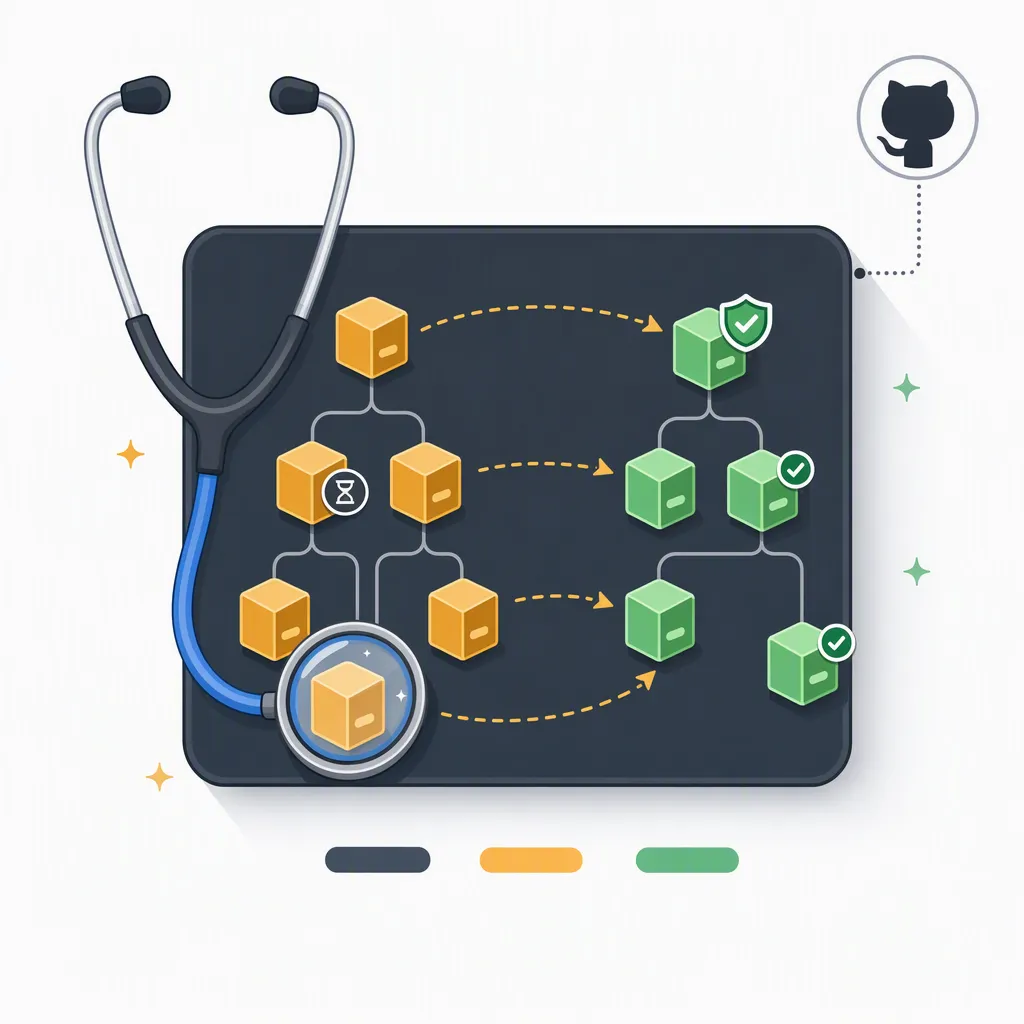
What it does
deps-doctor reviews dependency files and actual usage, proposes updates, and
checks that the project still works after changes.
- Detects npm, pnpm, Yarn, pip, Pipenv, Poetry, uv, Go modules, Cargo, Bundler, Composer, NuGet, Maven, Gradle, Swift Package Manager, pub, and Hex.
- Also covers the surfaces no language package manager owns: Docker base images, GitHub Actions versions, Terraform providers and modules, dev container features, and pre-commit hook revisions.
- Reports a manager it could not audit as blocked, so a partial audit never reads as a clean one.
- Defers to Dependabot or Renovate where one already owns routine bumps, and works the scope the bot leaves uncovered.
- Reconciles declared packages against real imports, keeping dependencies that are reached only through configuration or runtime loading.
- Reviews changed packages before allowing their install scripts to run.
- Defers releases that are too new under the configured minimum release age.
- Prioritizes vulnerabilities with evidence of exploitation, not severity alone.
- Screens new direct dependencies for typosquatting, install hooks, non-registry sources, maintainership, license, and registry provenance.
- Fixes breaking changes forward and resolves peer dependency conflicts by version selection, never with a force flag and never by downgrading.
- Checks that a clean install from the updated lockfile works.
- Makes no branch, commit, or pull request when there is nothing to change.
Use it
/deps-doctor
Update dependencies and fix security patches
Audit outdated and unused packages
Remediate the CVEs in this repo
Every git and GitHub write waits for explicit approval, and the concrete change list is presented first so there is something real to approve.