What it does
naming-is-hard is an interactive naming assistant that walks you from a blank page
to a shortlist with availability checks. It combines creative suggestions with
research into where each name is already in use.
- Profiles the thing. Reads your context (a description, a repo path, or a URL) and writes a Naming Brief: what it is, who it’s for, the tone, the constraints.
- Generates a deck. Produces a diverse, on-brief pool of candidate names across many naming strategies (compound, coined, metaphor, suffix play, and more).
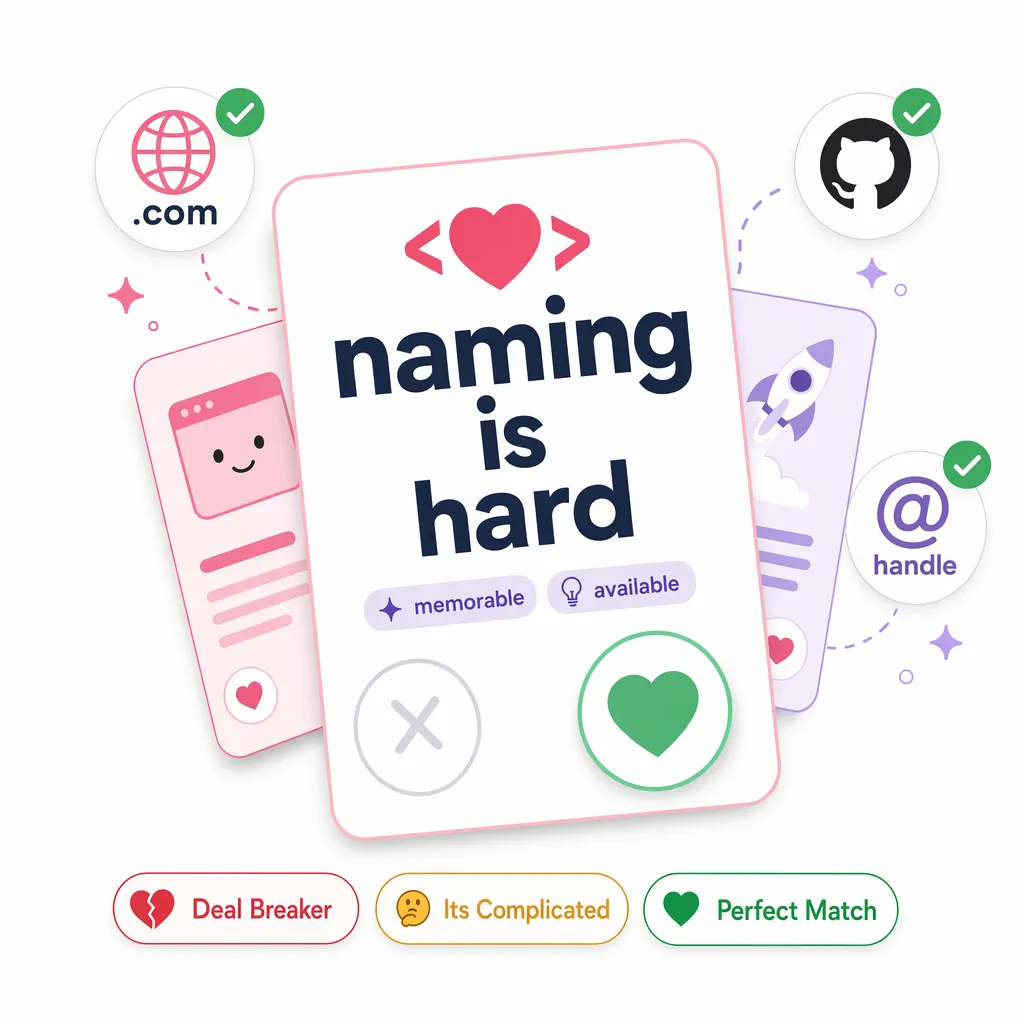
- Learns your preferences. You react to one card at a time (Like / Pass / Super-like). Later suggestions reflect your choices while keeping a mix of styles.
- Checks real availability. For your finalists it scans domains (DNS
and registration checks), GitHub, package registries (
npm,PyPI,crates.io,RubyGems, andNuGet), and social handles, then searches for trademark and existing-business conflicts. - Gives a verdict. Every finalist rolls up to one of three tiers:
- 🚫 Deal Breaker: a famous trademark or company owns it. Walk away.
- 💛 It’s Complicated: a key channel is taken or a potential conflict needs review.
- 💚 Perfect Match: no conflict was found in the checked sources, and the requested channels appear available.
Availability can change. These checks are a shortlist aid, not trademark clearance or a guarantee that a name is safe to use.
Use it
Just describe what you need:
- “Help me name my new task runner.”
- “Come up with names for a calm, privacy-first note app, then check what’s free.”
- “Is
Brightloomtaken? Domains, GitHub, npm, socials, trademark.”
The skill drives the conversation from there: brief, candidate cards, then your matches with full availability scorecards and verdict tiers.